
Top 5 Myths of Navratri Fasting
- Oct 5, 2024
- 3 min read
Updated: Oct 5, 2024
Navratri is a time of reflection, spirituality, and celebration—but it’s also a time for smart eating choices. Don’t get caught up in food myths that can lead to extremes. Balance, mindfulness, and moderation are the real goals of fasting. Take this festival as an opportunity to nourish your body and soul, and you’ll come out feeling refreshed, not fatigued.
Myth 1: You should only drink lemon water or stick to a liquid diet while fasting



Fact: While staying hydrated is essential, surviving solely on lemon water or liquids during Navratri can be harsh on your digestive system. In fact, lemon water on an empty stomach may cause gastric issues for some. Fasting during Navratri is not about depriving yourself but balancing your body’s needs. Eating fruits or sattvic foods like sabudana khichdi and halwa is a much healthier option. So, instead of focusing on a restrictive liquid diet, nourish your body with light, wholesome meals.

Myth 2: You need to live only on fruits during Navratri.
In "Kabhi Khushi Kabhie Gham", everyone looks picture-perfect while fasting, living on fruits and smiles alone. But even Kareena Kapoor’s iconic Poo wouldn’t survive a whole week on just apples and bananas.

Fact: Yes, fruits are great, but they shouldn’t be your only source of nutrition. Navratri is a time for balance and reflection, not deprivation. Sattvic foods like kuttu pooris, sundal, and nuts help you stay nourished during the seasonal transition. After all, we’re not starring in a soap opera, so keep your energy steady and your meals varied!
Myth 3: You can eat as much Sattvic food as you want.

Fact: It might be tempting to overeat just because the food is considered sattvic, but moderation is essential. The idea of fasting is to raise your consciousness and purify your mind and body. Overindulging—even in light, sattvic meals—can leave you feeling heavy and can distract from the spiritual essence of the fast. So don't just ignore overeating as we all know what happened to Mr. Bean in this episode.
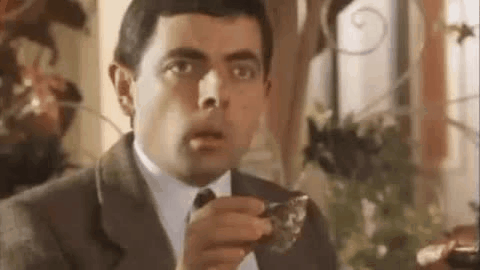
Fasting is a practice of discipline, so focus on eating in moderation, savoring your meals, and taking time for self-reflection.
Myth 4: "One meal a day is all you need during fasting."
Fact: Think back to Rab Ne Bana Di Jodi, when Shahrukh Khan’s character was feasting on Golgappa and biryani, while Anushka Sharma’s character chose to skip the heavy biryani to stay light.



Fasting during Navratri isn’t about starving or having just one heavy meal. It’s about balance, much like that scene — enjoying your food, but knowing when to stop! Eating just one meal can leave you drained, but having 2-3 light, nutritious meals, spread throughout the day, keeps your energy up for all the Navratri festivities. Just like how Anushka stays light for her dance routines, you should pace your meals for those long garba nights!
Myth 5: Fasting means starving

Fact: Contrary to this belief, fasting during Navratri isn’t about starving—it’s an opportunity to cleanse the body. Light foods, fruits, and sattvic meals can provide all the necessary nutrients without the heaviness. The goal is to simplify your diet, not starve yourself. Keep it balanced with a mix of fruits, light meals, and fluids.
So, how are you approaching fasting this Navratri? Are you keeping it balanced and mindful, or are you stuck in the myth cycle? It’s time to embrace moderation and enjoy this period of growth with awareness and joy!


Comments